
Key Takeaways
AI serves as a force multiplier for HR operations, but its value relies on structured interaction and human oversight rather than total autonomy. These core benefits and operational requirements define its place in modern talent management.
- Anthropic Claude offers massive token windows, enabling the processing of lengthy employee handbooks or complex organizational data.
- Structured prompting is essential to minimize hallucinations in compensation benchmarking or compliance-related outputs.
- Integration with ATS and HCM platforms allows for automated document workflows, reducing time spent on administrative re-keying.
- Human-in-the-loop oversight remains non-negotiable for high-stakes decisions like performance reviews and legal document drafting.
- Strategic use of AI in HR generates data-driven insights faster than traditional manual methods, though output validation is mandatory.
Understanding the role of Claude in B2B HR tech
Modern HR teams often struggle with the sheer volume of unstructured data generated during recruitment and performance cycles. Utilizing Claude for HR as a tool for text analysis, policy synthesis, and document drafting allows HR professionals to focus on relationship-heavy tasks. Unlike generic AI, Claude benefits from a massive context window which allows users to process entire sets of historical performance data or lengthy onboarding guides without truncation.
Key differences between Claude and generic AI for HR
While baseline language models are often prone to brief, surface-level responses, this technology excels in consistent instruction following which is critical for HR documentation. Many generic tools struggle with nuance in complex employee communications, whereas Claude AI provides a more grounded output that aligns with specific, uploaded professional standards or templates. By focusing on intent, HR teams can lean on this tool for iterative drafting sessions where the AI acts as a collaborative partner rather than a simple text generator.
Handling sensitive data with Anthropic's safety architecture
Managing confidential employee information requires a guarded approach to data processing and model interaction. Organizations must prioritize safety frameworks that protect intellectual property while maintaining compliance with internal privacy standards, much like how Bailey Flooring Supplies approaches their internal data management procedures. When deploying AI, it is vital to sanitize personally identifiable information before feeding inputs into any model to ensure that privacy remains uncompromised at the point of ingestion.
Setting up the Claude API for custom HR workflows
Connecting internal tools to a centralized AI interface requires a clear roadmap for API integration, focusing on data security and access control. Technical teams should map out existing HR data flows from platforms such as Salesforce to identify where automation will provide the greatest ROI. By creating secure tunnels between the AI gateway and your HR tech stack, you can trigger complex workflows—such as performance score summaries—directly from your core databases.
Evaluating the cost-benefit of AI-augmented talent management
Determining whether to deploy AI hinges on measuring actual time saved against the developmental costs of prompt engineering and system maintenance. It is helpful to track metrics such as hours spent per job description or document turnaround times before and after integration. For context, the following comparison highlights how manual versus AI-augmented workflows typically diverge in a small-to-mid-sized HR team environment:
| Process | Manual Time | AI-Augmented Time | Efficiency Gain |
|---|---|---|---|
| Job Description Drafting | 60 mins | 10 mins | 600% |
| Onboarding Prep Documentation | 90 mins | 15 mins | 500% |
| Performance Review Summaries | 120 mins | 20 mins | 400% |
This table illustrates that operational throughput is significantly higher when AI handles the initial generation of content. However, these figures are representational and effectiveness remains highly dependent on the quality of your prompt management protocols.
Streamlining talent acquisition and recruitment workflows

Recruitment is arguably the most information-intensive vertical for HR departments, and AI has begun to simplify the high volume of inbound data. By automating the extraction of key signals from thousands of resumes, teams can prioritize candidate outreach effectively. This shift allows recruiters to act less like database managers and more like strategic talent consultants who spend their time assessing human soft skills rather than scanning text files.
Drafting inclusive job descriptions with Claude
Creating compelling job descriptions requires a balance between technical requirements and brand positioning. Using prompt chains to analyze internal company tone, you can generate drafts that emphasize core competencies without exclusionary language. This approach ensures that your employer brand remains consistent across all active postings while reducing the administrative load of constant rewriting.
Parsing resumes to identify hidden talent pipelines
AI is highly effective at screening for specific keywords and experience markers across diverse resume formats. When parsing data from disparate candidate profiles, you can identify patterns in skill overlaps that might influence future hiring strategy. These structured parses should serve as a pre-screening filter to surface top-tier candidates who meet your predefined ICP requirements before a human ever checks the applicant list.
Conducting preliminary screening via structured prompts
Screening requires a standard rubric to ensure fairness and consistency among disparate candidates. By deploying prompt chains that evaluate applicant responses against a fixed scoring matrix, you can quickly categorize candidates based on their relevant experience. HR professionals should maintain a rigorous oversight process to ensure these AI-mediated screenings do not introduce bias or technical oversights that would affect the final selection quality.
Improving candidate communication through automated drafting
Timely communication remains a competitive advantage in a high-demand hiring market. Automated systems can take candidate data and generate personalized rejection or interview invitations that maintain a high degree of warmth and professionalism. These drafts should always be reviewed by a human lead before hitting the send button to ensure the tone appropriately reflects company culture.
Automating employee onboarding and documentation
Onboarding is critical to retention and cultural integration. By automating the logistics of day-one materials, HR teams can focus on the human side of the onboarding process, such as team introductions and goal setting. A structured, automated onboarding sequence often includes several key components:
- Personalized checklists for departmental tech access
- Automated links to internal policy and manual updates
- Scheduled training sessions based on role-specific requirements
- Periodic touchpoints for new hire feedback and queries
Generating personalized onboarding checklists
Tailoring an onboarding path for each role ensures that new employees start with the exact information they need. By inputting role descriptions and team-specific requirements, the AI can build a tailored checklist that covers technical needs, organizational structure, and immediate performance milestones.
Drafting policy summaries for new hires
Long employee handbooks are rarely read in full, creating a compliance gap. Drafting simplified, searchable summaries allows you to highlight critical policies—like communication standards or remote work expectations—without burying the employee in 50 pages of legal jargon. This helps ensure that the expectations are clearly understood from the first day.
Automating the creation of training materials
Generating training decks and summary sheets quickly is a major bottleneck during periods of rapid growth. AI tools can condense complex internal knowledge bases into digestible, step-by-step training modules. This functionality reduces the time subject matter experts spend on repetitive instruction while ensuring that training content remains current and consistent across all departments.
Managing documentation workflows between departments
Inter-departmental handoffs are frequently where document management breaks down, whether it involves sending contracts to legal or requesting equipment from IT. Creating automated triggers that alert the correct stakeholders when a new hire status updates allows the process to flow without constant manual prompting. This ensures that assets are provisioned accurately and compliance checks are completed before the start date.
Navigating performance management and skill mapping
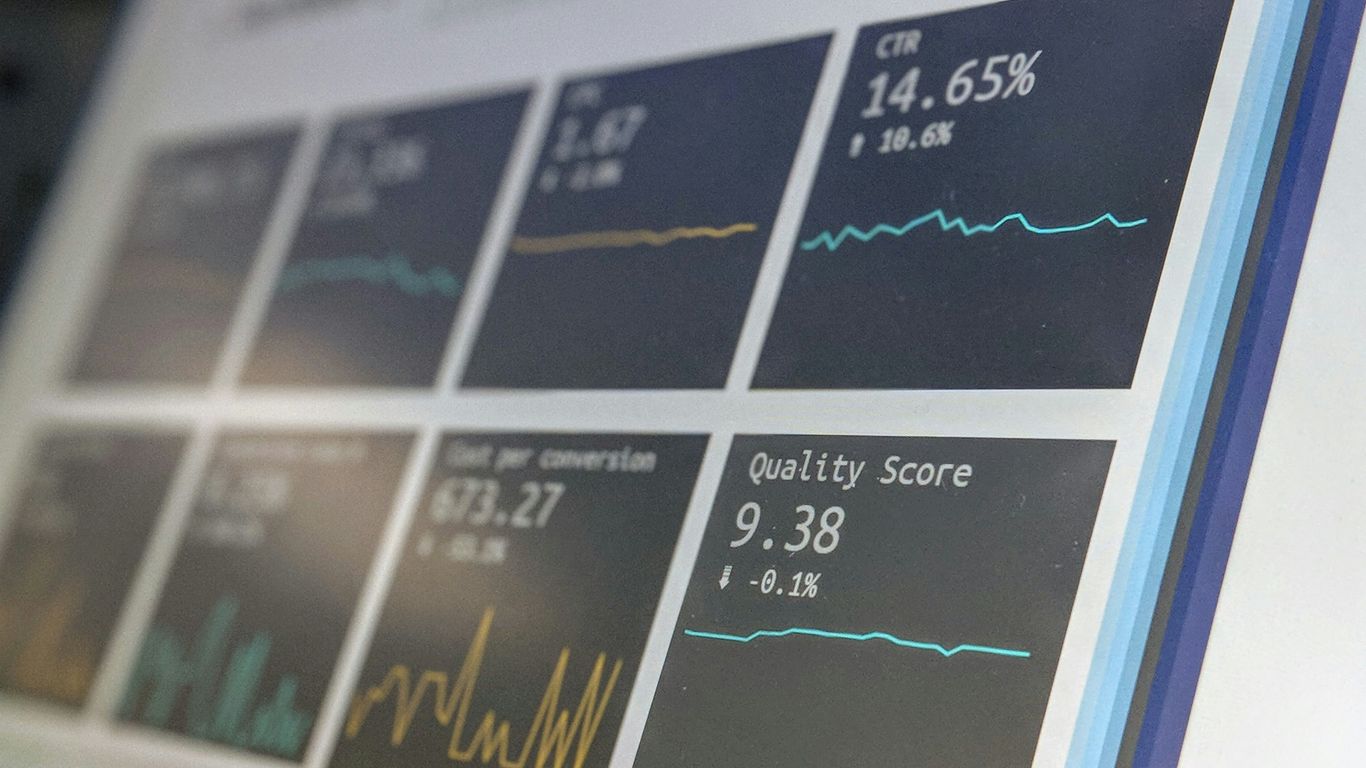
Performance management is often plagued by subjectivity and delayed feedback cycles. By using data-driven insights to structure performance reviews, HR leads can facilitate more honest, objective conversations between managers and their reports. The goal is to move from reactive annual reviews to continuous, data-informed growth conversations.
Synthesizing feedback from multiple stakeholders
Gathering 360-degree feedback often results in fragmented, inconsistent commentary that is difficult to aggregate. AI can synthesize these responses into coherent themes, identifying core strengths and development areas across a team. This synthesis provides managers with a cleaner starting point, allowing them to focus on the interpretation and coaching aspects of the performance conversation.
Building growth plans from performance data
Growth plans should be collaborative documents that build on past achievements. When performance metrics are mapped against company milestones, you can use AI to suggest specific professional development objectives. This objective output helps clear the way for meaningful conversations about where an employee stands and where they want to grow next.
Identifying skill gaps across an organization
Aggregating individual skill sets into an organizational view allows for better succession planning and hiring strategy. By analyzing performance reviews and project outcomes, leaders can identify which capabilities are under-indexed within the current team. This data informs whether to prioritize internal training or external hiring for specific needs in the next calendar year.
Measuring qualitative performance metrics
Measuring impact that is not strictly quantitative is difficult but essential for understanding high-performing team dynamics. AI can parse sentiment and impact descriptions in peer feedback to create more granular performance metrics. By mapping these qualitative inputs to broader success vectors, you can quantify performance traits like collaboration, leadership, and resilience that standard KPIs often ignore.
Prioritizing compliance and ethics in AI-driven HR
Ethics in HR is not a checkbox exercise; it is an foundational requirement. Any AI tool used for decision-support must be audited to ensure it complies with labor laws and internal ethics standards. Organizations that ignore this requirement risk legal disputes and severe cultural damage during the deployment phase.
Auditing AI output for unconscious bias
Training data or prompting choices can inadvertently amplify existing biases within an organization. It is essential to run periodic audits on the outputs generated by your AI workflows to check for skewed results. Reviewing samples of candidate assessments and review summaries for demographic trends helps ensure that the system promotes equity rather than hindering it.
Ensuring adherence to regional labor laws
Compliance requirements vary significantly by jurisdiction, making it difficult to maintain a unified process across a global footprint. AI can be trained to recognize the constraints of different local labor regulations and flag instances where an proposed process might conflict with those requirements. This adds a critical safety layer to your international HR operations.
Maintaining transparency in AI-mediated decisions
When a candidate is rejected or an employee receives a specific performance score, there must be a way to explain the role of AI in that decision. Maintaining transparent, well-documented decision chains ensures that HR teams can justify their choices. An AI output should never be the final reason for a termination or pivot without comprehensive human verification.
Managing data privacy under GDPR and CCPA
Data privacy standards are rigorous and require careful tracking. Any interaction with AI models must respect data residency and consent protocols established under major privacy acts. Ensuring that your AI tech stack is configured for regional compliance is a non-negotiable step for any organization managing international workforce data.
Integrating Claude with enterprise HCM and ATS platforms
Integrating AI into your existing stack is the only way to scale these workflows meaningfully across the organization. Without deep integration, these tools remain siloed sidebars rather than core infrastructure. Successful deployment involves linking the AI layer to your current sources of truth in your HR tech ecosystem.
Connecting via API to major HR software suites
Connecting directly to core HR platforms is what allows information to flow seamlessly. By building custom API handlers to move data from platforms into your analysis environment, you cut out manual exporting and file uploading steps. This deep integration is what separates high-scale HR tech from hobbyist automation experiments.
Designing effective prompt chains for data extraction
Prompt chain design involves breaking down complex requests into a series of smaller, sequential operations. Instead of asking for one massive report, you might break it into data aggregation, theme synthesis, and final drafting. This tiered approach produces more accurate outputs and gives you more room to debug errors at specific stages of the logic path.
Implementing human-in-the-loop oversight
Human oversight ensures that AI-generated reports are accurate and contextual. No matter how advanced the automation, final sign-off rests with the HR partner who understands the individual human history and specific business context behind the numbers. This prevents robotic, tone-deaf decisions that fail to account for the unique culture of your organization.
Troubleshooting common integration bottlenecks
Integration often falters when data mapping between systems is inconsistent or outdated. Identifying the points of friction early—such as improper field labels or API rate limits—is essential to keeping your automation stable. You should maintain a regular check-in schedule to monitor data quality and error logs, ensuring that your HR pipelines remain efficient and reliable.
Conclusion
Adopting AI in HR is a process of refinement, where the focus remains steadily on efficiency without sacrificing the human connection. Successful implementation requires a pragmatic look at your current manual bottlenecks and an iterative strategy for building automated connections. By focusing on high-impact areas like documentation, onboarding, and structured review analysis, HR teams can transform their operational capacity while ensuring that human judgment dictates the final outcomes for their employees.
Frequently Asked Questions
Why should AI be integrated with HR workflows?
Integration allows HR teams to scale their output and reduce repetitive, manual tasks like drafting initial communications, which frees up specialists to focus on high-touch employee relations and strategic talent development.
What are the main risks of using AI for HR tasks?
Primary risks include the potential for AI to mirror existing organizational biases, challenges related to data privacy and legal compliance, and the risk that AI might produce inaccurate information, especially in areas like compensation benchmarking or complex legal drafting.
How can organizations ensure AI follows labor laws?
Compliance is maintained by keeping human experts in the oversight loop for all final decisions, performing regular audits of AI-generated content, and configuring system logic to account for specific regional labor regulations.
What does human-in-the-loop mean in an HR context?
It refers to a process where an AI tool provides an initial draft or data synthesis, which a skilled HR professional must then review, validate, and approve before any final decisions are communicated or acted upon.
Is privacy compromised by using AI models in HR?
Privacy remains protected as long as organizations use controlled environments and ensure that Personally Identifiable Information is either excluded from inputs or managed through enterprise-grade data security protocols.
How does AI handle qualitative HR performance metrics?
AI processes qualitative data by analyzing patterns in feedback text and performance narratives, synthesizing these into actionable summary themes, and mapping them to predefined performance competencies.
Can AI replace human judgment in HR?
AI is meant only to support or accelerate the HR process; it cannot effectively replace the nuanced judgment of a human partner, especially concerning deep cultural context, sensitive career guidance, or inter-personal conflict resolution.